
Our Journey

For over 25 years, Trans Canada Trail Ontario (TCTO) has created a linear trail connection throughout Ontario to complete the Trans Canada Trail initiative. The original completion target was met on the country’s sesquicentennial anniversary in 2017. The Ontario section of the trail was honored as an “Ontario Trail of Distinction” by the Ministry of Tourism, Culture and Sport.
This bold dream began in 1992, when Dr. Pierre Camu of Ottawa and Bill Pratt from Calgary had the visionary idea of connecting local trails across Canada, and building new ones, to form a network that would link the country from coast to coast to coast. A national Trail was a grand idea of showcasing and celebrating everything we love about Canada. In the process of completing this initiative, TCTO has connected 150+ communities across Ontario through 5,200 kilometres of trails. Trans Canada Trail has the longest trail section in the Province of Ontario.
Such a significant project began in 1994 when a small group of trail enthusiasts started to identify a route for the Trans Canada Trail in Ontario. The suggested route was to follow along public land holdings as much as possible, abandoned rail corridors that were becoming available for multi-use trail purposes and to join with existing trail systems. It was determined early on that the Ontario route would include Ottawa, Toronto and reach down into both the Niagara Peninsula and the Windsor-Detroit corridor. At the time there was an existing Niagara Parkway Trail and an emerging Chrysler Greenway in Essex County and Windsor. The continuous Trans Canada Trail was merged with the diverse geography of the south, north and western Ontario’s lakes, rivers and landmasses. This divergence from a main single corridor presented challenges from the very beginning, as there were regions with limited or no linear trail connections. Many gaps were connected for which a significant marketing drive was conducted to unite and rally broad public support for the initiative.
The first trail section in the country to be registered as Trans Canada Trail was the Caledon Trailway in Ontario, shortly followed by the Seguin Trail (Huntsville area to Parry Sound) and the Jackson Creek Trail in Peterborough, and all occurred in 1997. Additional trails in the Province were soon after registered by the Ontario Trails Council. Gaps between the registered trails reduced in distance but grew in number. The Ontario government, through the Ministry of Natural Resources, had supported the acquisition of 5 abandoned rail corridors to be turned into linear parks for trails; however, there was an election, the government changed and the linear park idea was scrapped.
TCTO secured an Ontario Trillium Foundation grant during 2001 and 2002 to conduct a number of projects. These included developing an economic impact study of the trail in Ontario, compiling background information for guidebooks, and coordinating the closure of Trans Canada Trail gaps in Ontario. This was the beginning of TCTO’s final work towards completing trail connections. TCTO’s success is reflected in the closing of 59 trail gaps in 6 years and the physical composition of a trail that stretches more than 5,200 kilometres long. TCTO connected communities together such as Kitchener and Cambridge through a pedestrian bridge over Highway 401, linked Conestoga College’s northern Cambridge campus to the southern Kitchener campus, and connected the amalgamated community of Chatham-Kent and its 13 former and disparate municipalities via 1 route through the region. TCTO also worked with trail partners on routing along roadway shoulders and along the north shore of Lake Superior. One of TCTO’s most exciting trail sections is 300 meters above ground in St. Thomas on an elevated bridge over Kettle Creek, an unprecedented example of the Province’s distinct trail achievements that connects the past, present and future through the country’s industrial heritage.
It was not possible to create a safe land base trail in the northwestern part of the Province and TCTO led the creation of a connected over 1,200 kilometre canoe route from Thunder Bay to the Manitoba border. TCTO formed Path of the Paddle Association, with local volunteers to manage this water trail section. Working with the local partners, TCTO established two additional water routes. One is along the north shore of Lake Superior from Thunder Bay to Sault Ste. Marie and the second is along the west shore of Lake Couchiching from Ramara to Washago.
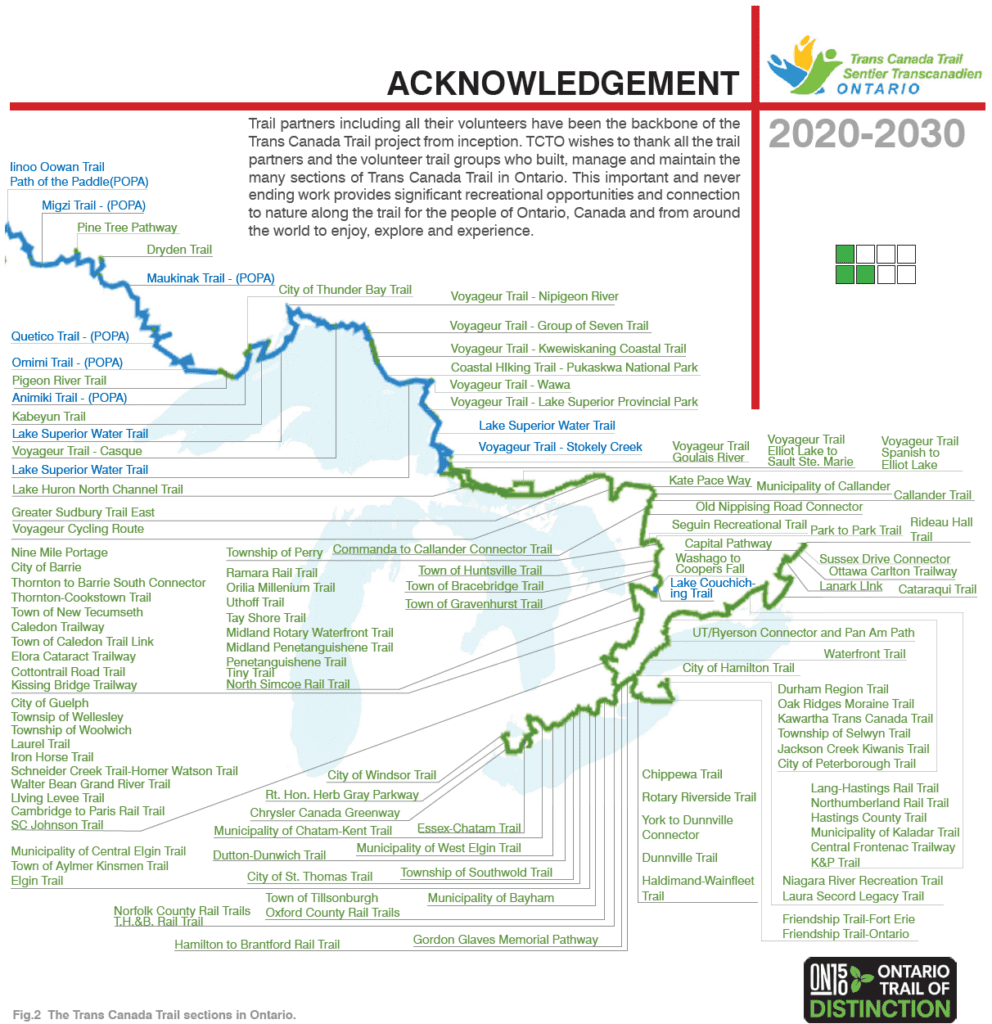
Trans Canada Trail Sections in Ontario
Legacy Projects
TCTO has achieved a significant accomplishment in the process of completing over 5,200 kilometres of Trans Canada Trail connections, creating the longest stretch of the brand. The Ministry of Tourism, Culture and Sport honored TCTO’s 25 years of commitment and contribution to establish this trail brand through the recognition of an “Ontario Trail of Distinction.” The aim of TCTO’s Legacy Project initiative was to leave a clearly visible trace on the ground with inspiring messages for future generations of trail users. These projects incorporate, promote, celebrate, and recognize the valuable partners involved. Our goal is to foster greater pride within the community and increase trail stewardship throughout the system.
150+ Heritage Time Capsule Project
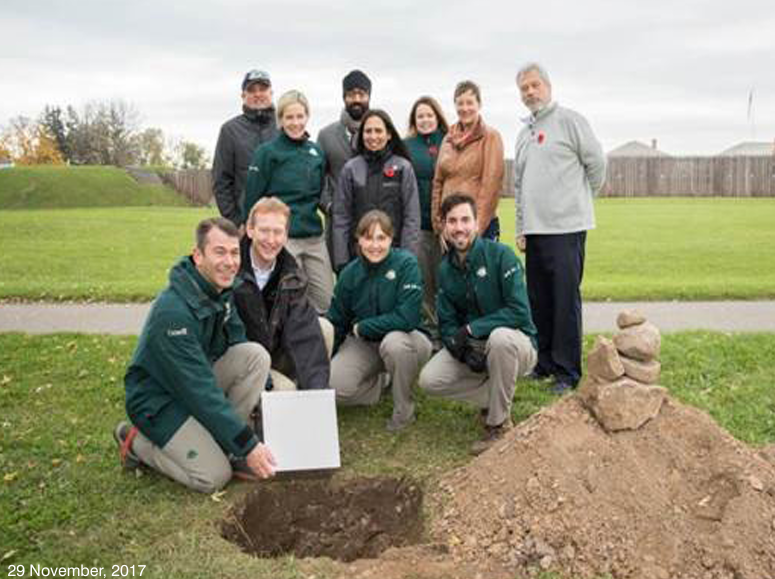
In 2017, TCTO celebrated the country’s 150th year since Confederation. As part of this effort, TCTO developed a Heritage Time Capsule Project to recognize the value of partnerships, emphasize gateway locations to the province and make a connection between current
and future trail communities. TCTO has installed four Time Capsules at different locations in the province: Fort George (Niagara-on-the-Lake), Aylmer, Prince Township and Thunder Bay.
Stone Marker for Fort George, National Historic Site at Niagara-on-the-Lake
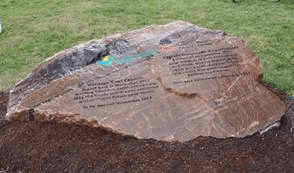
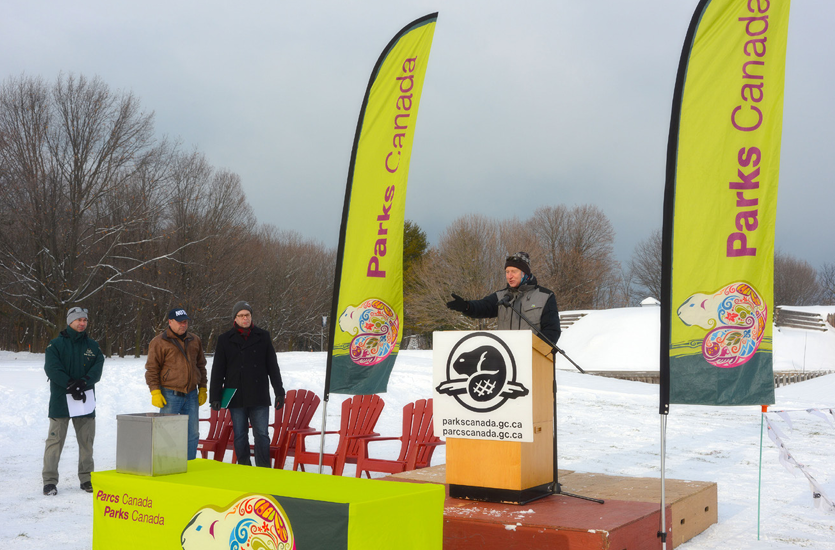
TCTO developed the Stone Marker Project as part of its Legacy Program. In spring 2020, TCTO installed its first Stone Marker in partnership with Parks Canada to commemorate the very first 150+ Heritage Time Capsule Project at Fort George. A large piece of Muskoka granite rock was engraved with an inspiring message of collaboration to the present trail community and future generations. This is a major gateway location where thousands of visitors to the fort and many more thousands of regular users walk, bike and run on the Trans Canada Trail section that runs through the National Historic Site. All major events and ceremonies at the fort are held right next to the trail where TCTO’s Heritage Time Capsule has been installed. This Time Capsule will remain buried for 50 years and will be opened in 2067.
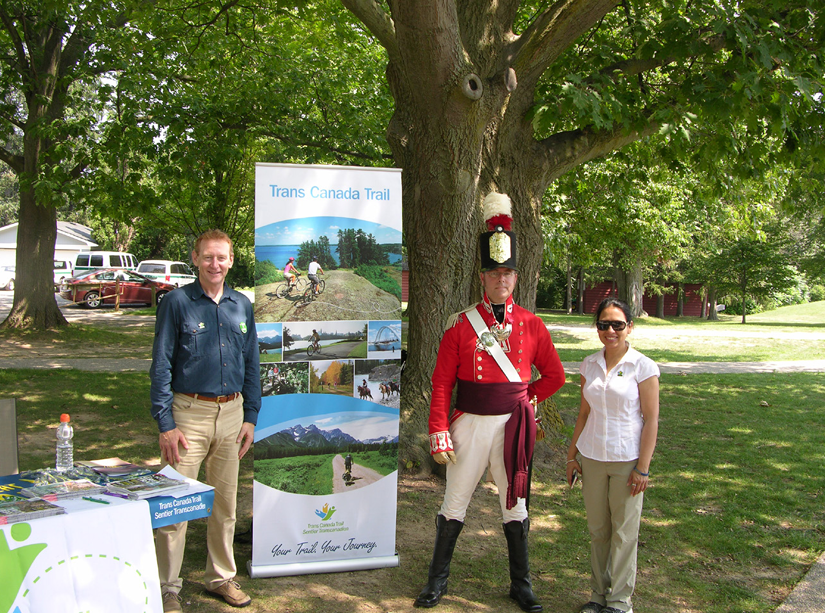
Time Capsule Buried at Lorne Allard Fisherman’s Park, Thunder Bay
November 20, 2017 — A time capsule containing items contributed by Trans Canada Trail Ontario (TCTO), the City of Thunder Bay, St. Ignatius High School, and numerous other community agencies and partners, was buried today at Lorne Allard Fisherman’s Park. View full media release on the City of Thunder Bay website: Time Capsule Buried at Lorne Allard Fisherman’s Park (November 19, 2017)
Time Capsule Buried at Gros Cap Marina Park, Prince Township
Prince Township Ontario 150 Time Capsule
September 25, 2017 — Read the full article here: http://www.saultstar.com/2017/09/24/council-to-partner-with-trans-canada-trail-ontario-to-create-heritage-150-time-capsule
Reception by Lieutenant Governor of Ontario Elizabeth Dowdeswell
November 4, 2017 — The Trans Canada Trail / The Great Trail was honoured by Lieutenant Governor of Ontario Elizabeth Dowdeswell during a reception at Queen’s Park.